A second opinion on a twelve-year-old’s ODD label, and the difference between trying to defeat a limit and trying to find one.
The referral packet used the word random four times. Randomly groans during instruction. Randomly hits classmates. Random outbursts in PE. Random refusals.
Nothing about it was random. Random is usually the name a pattern wears before somebody finds it.
Nora was twelve when her parents brought her in for a second opinion. The first opinion had arrived two years earlier. The school’s eligibility process raised the possibility, and a brief community evaluation put it in writing: oppositional defiant disorder. By seventh grade the label functioned as her name. Teachers read her file before they met her. Elementary school had written notes home. Middle school was writing referrals.
The confusing part, the part that sent the story through the parent grapevine, was the parents. They were kind. Not performatively kind. Actually kind. Soft-spoken, patient, the people other parents call when a carpool falls through. And their daughter was shoving kids in PE.
That gap invited a theory, and the theory went around. If a child is that angry and the parents are that nice, something must be happening at home. It reached them in the school parking lot, the way these things do. A birthday party Nora was not invited to. A mother who went quiet at pickup. A sentence, secondhand, about what people wondered. They drove home without speaking. Kind people, accused in the passive voice.
To be professional about it: unexplained aggression in a child puts maltreatment on the differential whether anyone likes the implication or not. So it was on mine. Records review, developmental and pediatric history, collateral interviews, an individual clinical interview with room and privacy to disclose, a trauma screen. Their kindness did not answer the safety question. The data did, and the answer was no. The consideration was documented, and so was the basis for the conclusion. The concern itself belonged in an evaluation. The parking lot version of it did not.
By the time they reached my office they were out of ideas and nearly out of hope. They were worried about school, about her future, mostly about her happiness. And underneath the worry sat something they could barely say out loud: anger at her, and shame about the anger. It came out sideways at home. A sigh over homework. A tight goodnight. Courtesy with a temperature. They never yelled. They were not confrontational people. They were proud of that.
Hold that detail. It turns out to be the whole case.
The clean file
Cognitive testing was intact. WISC-V solidly average to high average, with no scatter that could have explained the behavior. Academic skills where they should be. Attention measures unremarkable. Learning, mood, and trauma each got their look before the pattern was allowed to mean anything. Rating scales split by setting: teacher forms hot on externalizing, parent forms cool. Cross-setting discrepancy is not noise. It is a finding. A truly pervasive problem usually leaves traces across settings. Nora’s behavior had a context.
Then the self-report. She was twelve, at the youngest edge of the PAI-A’s range, so I interpreted with that in mind. The profile came back almost too clean. Positive impression management rose into the range where the manual tells you to treat the clinical scales as likely underestimates. The aggression scale sat at or below the adolescent mean. Treatment rejection was elevated: nothing is wrong, nothing needs to change.
A girl referred for hitting classmates weekly had just reported less anger than the average twelve-year-old.
The two easy readings were that she was lying or that the measure had missed her. I sat with it and did not love either one. Something in the administration had snagged my attention, and I could not name it yet.
The eraser
Then I remembered what I had watched her do. She had moved through the form quickly, steadily, and on certain items she slowed. Stopped. Erased. Not often. Maybe a dozen times across more than two hundred items. Quiet, careful erasing, the kind that leaves almost no trace unless somebody looks.
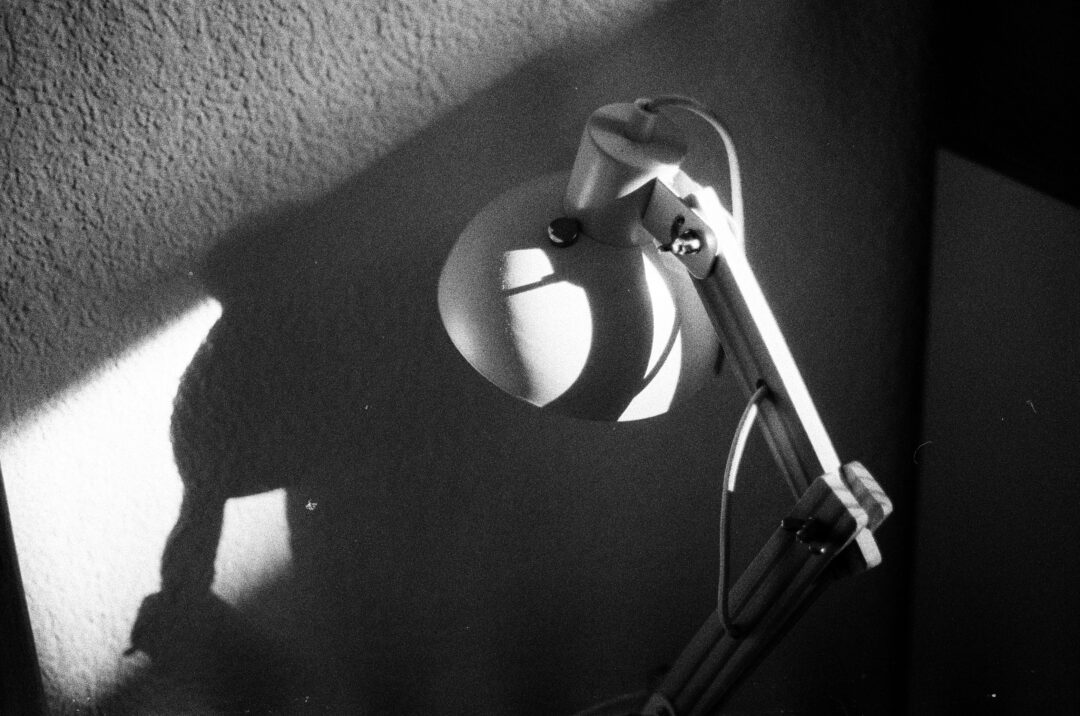
I went back to the answer sheet and angled it under the lamp.
Every erasure sat on an anger item. Every single one. The temper items. The items about slamming and snapping and saying things you regret. And under the eraser, the ghost of the first answer was still legible. Mainly true, erased. Very true, erased. What remained, in clean, confident pencil, was false.
She had answered honestly. Then she had corrected herself into the child she believed she was supposed to be.
The score was one piece of data. The erasing was another. On its own, the erasing could have meant several things: shame, fear of consequences, limited insight, a wish to look good for a stranger. But it matched something I had already seen. It matched the house.
She had not faked good. Faking good is strategic. This was procedural. She performed in real time, item by item, the same operation her household ran on its own emotional record: register the anger, then remove it from the file. The validity scale was not only measuring her honesty. It was measuring the family’s policy on anger, rendered as a T score.
The finding was not the erasure alone. It was convergence, and the rest of the evaluation supplied it.
Sentence completion: When I get angry, I do not really get angry. The erasure again, in verbal form. House-Tree-Person and a family drawing: everyone smiling, nobody touching, wide white space between the figures. The drawings did not diagnose anything. They repeated a theme. Roberts-2 stories in which conflict appeared and then narrated itself away: then they were fine, then it was okay, endings arriving before the middles had finished.
And the sand tray, where she said it in the plainest language she had. Every scene she built contained a fight. Soldiers, animals, cars, it did not matter. And every adult figure she placed was fine. Smiling. Facing away.
The adults in the sand were always fine.
The formulation
Nora’s parents were warm, emotionally quiet, conflict-avoidant people. Nora was a high-intensity child who read emotional signal strength as presence. That is not pathology on either side. It is a mismatch of dialects. For some children, calm does not feel like calm. It feels like nobody has arrived yet. Another child in the same home might have experienced the quiet as safety. Nora experienced it as absence.
In her family, anger was inadmissible. Not punished. Worse than punished: unregistered. Her parents’ anger did not disappear because they refused to voice it. It leaked in sighs and tight courtesy, and Nora felt all of it while being assured none of it existed. A child can learn to regulate against honest anger. She cannot regulate against a signal that officially is not there. For a child like Nora, incongruence was more dysregulating than heat.
So the anger went underground at home and surfaced where demands were actually placed on her. At school, direction was the closest thing to open confrontation in her life, and she tested it. The groan, the shove, the refusal: each one was the same question, asked louder. Is anyone here solid enough to push back? Defiance, as the label imagines it, tries to defeat a limit. Nora was trying to find one.
What looked like defiance from the outside was, from the inside, lonely and exhausting: a way of asking, over and over, whether anyone could meet her intensity without disappearing. None of it made the aggression acceptable. It made it interpretable, and interpretable is the only place where discipline becomes more than reaction.
Oppositional defiant disorder can describe a pattern. It can count duration, frequency, and impairment, and descriptive labels do real work: they organize services, risk, and communication. But description is not explanation. A label can tell adults what a child is doing and still leave unanswered what the behavior is doing for the child. Nora’s chart had named the what for two years. The evaluation had to ask why.
What I told the parents
Two things, and the order mattered.
First: you did not do something wrong. You did something mismatched. Those are different findings with different treatments. Only one deserves guilt.
Second, the harder one: your gentleness is real, and to your daughter it sometimes reads as absence. Visible anger, held with control and without contempt, tells a child something specific: I believe you are strong enough for my real reaction, and I will not disappear when you have yours. It is a compliment paid in confrontation.
Visible does not mean explosive. It means readable. This is boundaried attunement: warmth inside limits rather than warmth instead of limits. For a child like Nora, the limit is proof that somebody is there.
This is not an argument against gentle parents. It is an argument for fit. Parents do not have to be cold or negligent to be hard for a particular child to read. Sometimes the problem is not the love. It is the translation.
Treating the fit
The problem lived in the fit, so the treatment could not be aimed mainly at the child. I referred the family to a registered art therapist with sandplay training for dyadic work. Nora and her parents needed a room where the pattern could happen differently. The expressive work gave her a channel and gave them practice at seeing a signal before it got corrected away. Not because sand tray work is an answer to aggression. Because for this family, symbolic work was a language all three of them could learn at the same time.
Parallel parent sessions focused on one skill: expressing honest limits with visible affect and steady control. She needed more limits, not fewer, but limits she could feel as contact rather than rejection.
The school got brief guidance of its own. It did not need to become softer. It needed to become clearer without becoming contemptuous: direction delivered with warm, readable firmness, and no trading volume for compliance.
Months later, her mother described a small scene that captured the change. Nora had broken something carelessly, and instead of the sigh, her mother said, out loud and evenly, “I am angry about that.” Nora’s shoulders dropped. Not in fear. In relief. Someone had finally handed her the signal in a form she could read.
Over time, the referrals from school became rare. Not because anyone extinguished a behavior. Because the behavior no longer had to carry the whole message. It was never random. It was a search, and the search quieted when somebody let themselves be found.
The case described here is a fictional composite drawn from clinical experience. Details have been altered and combined, and no individual client or family is depicted.