Two children, a city full of answers, and the cost of being sure too soon.
Max arrived with a form. Madaline arrived with a binder.
His was a single page, a teacher’s rating scale filled out in blue ballpoint, folded twice to fit inside his father’s back pocket. Hers had tabs. Sleep, food, labs, school, supplements, and a section at the back, the thickest one, labeled Questions. Her mother set it on the desk with both hands.
This is the story of Max and Madaline. It went fast for one of them and slowly for the other.
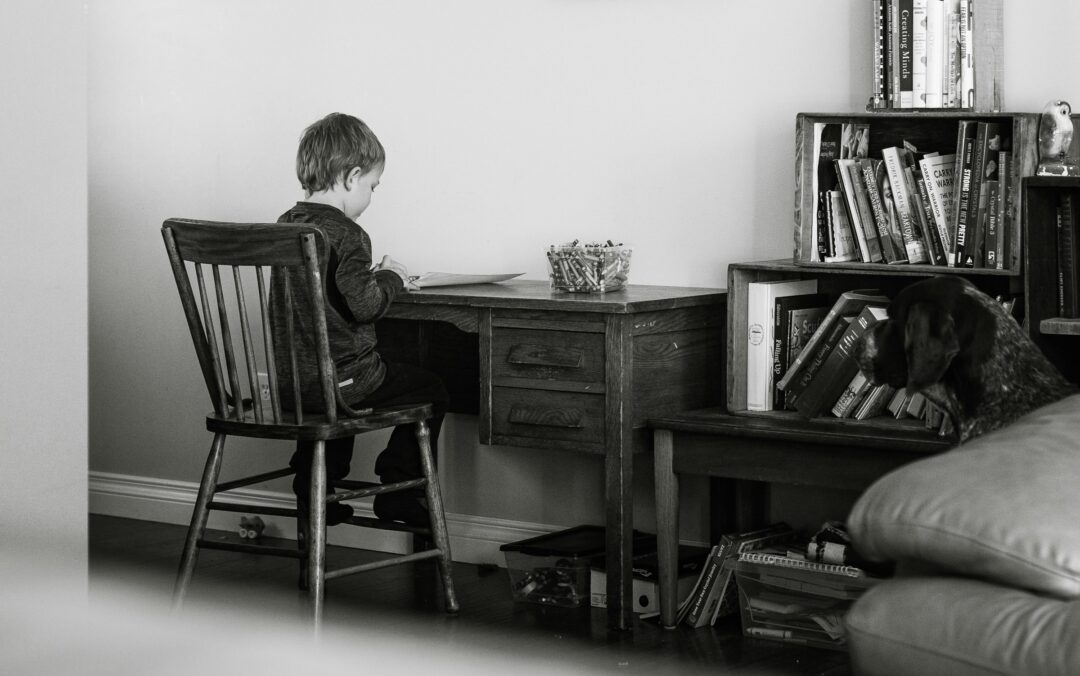
Max was eight, and he could not sit still, and his teacher had a form.
The form went to a provider who was credentialed, overbooked, and pattern-matching at the speed the schedule demanded. Fifteen minutes. A rating scale. A familiar shape. Boy, active, disruptive, inattentive. ADHD. A stimulant, a low dose, a follow-up in six weeks that would mostly be about the dose.
None of this happened at a bad clinic. It happened at a reputable one, the kind where you wait three months for a first appointment and the appointment is fifteen minutes, and nobody on either side of the desk finds that combination strange. And nobody in the room was a fool or cruel. The family had waited those three months. The school had been calling. They had paid, out of pocket, for an answer, and everyone in the building needed the specialist to make the not-knowing stop, ideally before the next family was already in the waiting room. A system built like that pays for decisiveness, and it pays whether or not decisiveness is warranted. That explains why the fast call was the easy one. It does not make it the right one.
There is nothing exotic about how fast it happened, either. The youngest children in a class are medicated for ADHD at higher rates than the oldest, and it is not a small effect: a 2026 study of English records, comparing children born just before and just after the school-entry cutoff, found the younger starters forty to fifty percent more likely to be on ADHD medication by fifteen, a gap driven almost entirely by first prescriptions between the ages of five and eight.[1] Some of that difference is almost certainly ordinary immaturity read through a diagnostic frame; a birthday should not carry that much weight over who ends up with a prescription. Max’s case was not that. His attention problems were real. But the same reflex ran his visit, the speed with which a visible, inconvenient behavior becomes the whole of what a child is, until the diagnosis stops being one finding among several and becomes the entire frame.
Here is what the fifteen minutes did not have room to ask. Max did have attention problems. They were real, and on a rating scale they were textbook, which is exactly the trap, because underneath the attention there was something the form had no box for. Max was frightened. He was rigid in a way that ran his afternoons, organized around small routines that had to go a certain way or the whole day came apart, and the not-sitting was not only restlessness. A good part of it was a boy coming loose whenever the routine bent. The attention was real, and it was also, in part, the surface of something the exam never went looking for, and nobody had asked which one was on top.
That is the entire error, and it has nothing to do with whether the ADHD was real. It was. Plenty of children have genuine ADHD and are helped enormously by treating it, sometimes with medication and without apology. The question the fifteen minutes never reached was not whether this was ADHD but whether ADHD was the thing driving this child or the most visible thing sitting on top of something that mattered more. A form answers the first question. Only staying with a child long enough answers the second. Nobody stayed. The most legible problem became the whole diagnosis.
The stimulant helped the surface. He sat more. Meanwhile his sleep frayed, the rituals tightened, and his edges sharpened. The follow-up read the new trouble as a dosing problem and raised the dose. When that made things worse, a second medication arrived to manage the first.
There is a story going around, in certain zip codes more than others, that this is what child psychiatry does, that it drugs our children. If you have followed Max this far, you are primed to nod along. Do not, or not yet, because the true story is less lurid and worse. Choosing not to medicate first is respectable, and often it is correct; for the youngest children the guideline itself begins with behavioral and family support and holds medication in reserve.[2] The stimulant did not poison Max, and it was not harmless either. Its effects were part of what he went through, and the adverse effects of these drugs are real, which is exactly why they have to be watched.[3] But the medication was not the main thing that hurt him. The main thing was the sequence you just watched: worsening answered with a higher dose, then a second drug, and not once a step back to reopen the question of what was actually wrong.[4] Bad medication management is still bad medicine, and that is what he got.
By the time a therapist who would not stop asking finally said out loud that this did not look like the ADHD it had been treated as, Max was eleven, and something had set. Not the symptoms. Those could still move. What had set was the thing he believed about himself, which was that he was broken, that his brain was a problem to be dialed down, that the adults kept adjusting him and he kept failing the adjustment. He got a real assessment, eventually. He got a formulation, eventually, and it was a good one, and it came with a medicine that might genuinely have reached the part of him that had been suffering the whole time. He will not take it. To Max, a pill means something is wrong with me and the adults are going to try to fix me again, and he has had all the fixing he can stand. That is the cruelest part, and it is not a side effect of any drug. It is a side effect of three lost years. He got the right answer, finally, and he cannot make himself use it, because of what the wrong answer taught him. I am not going to pretend that ends clean, because it does not.
Madaline’s family did everything the other way. That is the point. It is also not a solution.
Madaline was ten, and gifted, and fine.
She was fine the way certain children are fine, which is to say she was drowning where no one could see it, and doing it so gracefully that the drowning read as poise. She rewrote her assignments until midnight because she was a perfectionist. She took forty-five minutes to get out the door because she was particular. She asked her mother the same question five different ways before school because they were close, the two of them, unusually close. She skipped lunch because she had a sensitive stomach. She was the best student in her grade because failing at anything felt, to her, like dying.
Every one of those was true, and every one of them earned her a compliment. That is the trap. Her symptoms did not disrupt anyone. They looked like conscientiousness, like maturity, like a good girl trying hard, and the better she got at hiding inside them the more the hiding looked like character.[5]
And there was one thing she had never told anyone. Not her mother, not the therapist she would come to love, not the practitioners her parents would eventually assemble. A thought that showed up without permission and would not leave, so ugly and so specific that she was certain it meant something rotten was true about who she really was under the good grades. She had built a private arithmetic to make it go quiet, counted and recounted, a ritual she ran entirely inside her own skull where no adult could see it and no amount of love could reach it. She was a ten-year-old who could tell you the truth about everything except the one thing that was actually wrong.
Her parents were exactly the parents the caricature warns you about, and they loved her without limit. Real food, no screens, a functional-medicine panel that came back with the usual constellation of small imbalances, so they did the protocol, and the protocol was not nothing, and the protocol was not enough. By then Madaline’s mother had read more about the gut-brain axis than most of the residents I have trained, which was genuinely impressive and also part of the problem, because it is very hard to go looking for something that sits outside a framework you have already mastered. The group chat had cured the same thing twice, once with an elimination diet and once by moving to Ojai. In this house, medication was a dirtier word than gluten. Beginning with the least invasive thing is a coherent way to love a child, and they were right to begin there. Where it stopped being careful was later, when the evidence kept arriving that their framework was not reaching her and they kept choosing the framework anyway.
By the time anyone thought to look harder, Madaline had four specialists and three kinds of magnesium, and not one of the adults had asked her the only question that would have cracked it open, which was what she believed would happen if she let the homework stay imperfect.
They found a good therapist, and here is what the therapist noticed, the thing four specialists and a binder had walked straight past. Madaline could not leave a session. She would gather her things and get to the door and turn back to ask whether she had said something wrong, whether the therapist was upset with her, whether it was really all right that she had complained about her mother. She would be reassured. She would nod, and reach the door again, and come back and ask once more. It was such an ordinary thing, a polite, anxious child checking in, that it had been invisible to everyone who loved her. The therapist did not read it as an ordinarily anxious child checking in. She noticed that the reassurance never took, that one answer was never enough, that the asking had the quality of something the child could not stop rather than something she needed, and she began to pay a different kind of attention.
The same thing ran at home, pointed at her mother, and there it had a job. Madaline and her mother were wound so tightly around each other that Madaline’s fear kept her mother close, and her mother’s own worry poured back in and turned the volume up, and the two of them spun. Every time Madaline asked the same question a fifth way and her mother answered it a fifth time, the answer bought maybe ninety seconds of quiet and then taught the fear that asking works. Parents can become part of the machinery without having caused the disorder. In a later look at the data from a landmark randomized trial of pediatric OCD treatment, the children whose families most accommodated the rituals, who answered the questions and smoothed the path and arranged the day around the fear, improved the least, across every treatment condition.[6] The therapist named it, gently, and worked it, and it moved. Her mother learned to sit inside Madaline’s distress without rushing to close it, which let Madaline begin to have a self that was not only the symptom.
And it helped. And it was not enough. That is the part that left everyone confused, because they had done the brave, unglamorous work, and the girl was still going under.
Here is what the family lens could not reach, and what took real courage to admit. The therapist was right that something was tangled. She was wrong that the tangle was the whole story. Underneath the enmeshment there was a separate obsessive-compulsive process with machinery of its own, an engine of intrusive fear and compulsion that no amount of family work was going to talk down, because it was not an argument and could not be reasoned with. The therapy they were doing had reached something real, and it had reached its limit.
The thing Madaline’s parents finally did was not the elimination diet. It was letting in a second set of eyes on the one fear they had been managing around, which was that their whole framework might have stopped serving their kid. They agreed to a broader assessment, which they had resisted, because it felt like signing up for a machine they did not trust. It was not that. It was a wider, more structured look from outside the house, and it reopened a case everyone had assumed was closed.
The assessment is how they found the psychiatrist. Not a conveyor belt. The careful kind. Madaline’s mother brought the binder to the first appointment, and he did not reach for it. He talked to Madaline first, and listened, and let her tell him who she was before he let the tabs tell him. Then he read it, all of it. He met with the family across several visits, and it was on the fourth that he named the thing and committed to a direction: their daughter had been carrying obsessive-compulsive disorder the whole time, most of it hidden inside the behaviors the adults had been praising, and it was treatable, and treating it would be neither quick nor gentle. He recommended a medication. Not as a rescue and not with a flourish, but as one tool among several. The family agonized. They started low. The first drug flattened her in a way they hated and they stopped it, and he did not argue, and months later they tried again, differently, and the second gave her back enough room to breathe. It took the edge off the panic. It did almost nothing for the compulsions, which needed exposure work,[7] which meant deliberately not asking whether she was all right and sitting inside the horror of not being told, and for a long stretch Madaline hated every adult who loved her for making her do it.
She is doing better now. Not cured. Better, and unevenly. She missed a chunk of sixth grade. Her mother still answers the reassurance question sometimes, when she is tired and the asking is bad, and then catches herself a beat too late. There are mornings Madaline still cannot get out the door. This is not a story about a treatment that failed, and it is not a story about one that worked. Even under unusually good conditions, this kind of treatment is not a fairy tale. In that trial, the strongest option tested, exposure-based therapy combined with a medication, brought only about 54 percent of children to remission after twelve weeks.[8] Madaline did not get there. She got better and she stayed ill, and both were true. What changed is not that the suffering ended. It is that the adults around her finally understood the machinery they were dealing with, and stopped treating the wrong thing with such confidence.
So here is what the two of them are for.
Max’s father could fit the whole of his son’s diagnosis in a back pocket. Madaline’s mother needed both hands to carry hers. One family arrived with too little and the other with almost too much, and the form and the binder turned out to be the same mistake wearing opposite clothes, which is the belief that the answer was already in hand and only needed reading. It was in neither object. It never is.
And here is the part I do not want to soften, because softening it is its own dishonesty. Caring is not the same as getting it right, and context is not absolution. Max’s prescriber was working inside a brutal schedule and also made a bad call, and the schedule does not erase the call: a judgment failure the system made easy is still a judgment failure. Madaline’s parents were loving and thorough and brave, and they also spent a long stretch mistaking a framework they had mastered for the whole of their daughter. People can care immensely and still be part of what is hurting a child. That is harder to hold than the version where everyone is simply doing their best, and it is truer. What costs the years is rarely that someone stopped caring. It is the quiet confidence that the piece in your own hand is the whole child.
And the thing worth honoring in both of these stories is bravery, real bravery, which is not picking the correct camp. It is giving up your certainty at the exact moment the child in front of you stops fitting it. Madaline’s parents did that, late, and it was real, and it did not give her back the part of sixth grade she lost. Max’s second set of clinicians did it too, and got the formulation right at last, and could not undo what the first answer had already taught him about himself. Bravery does not refund time.
The children and families described here are fictionalized composites drawn from clinical experience. Details have been altered and combined, the clinicians within the cases are composites as well, and no individual client, family, or provider is depicted.
Notes
[1] Children who are the youngest in their school year are diagnosed and medicated for ADHD at higher rates than their oldest classmates, a pattern found across many countries and long attributed to relative immaturity being read as disorder. A 2026 analysis of English administrative data, using the sharp September school-entry cutoff and comparing children born just before and just after it, found that children who started school younger were roughly 40 to 50 percent more likely to be treated for ADHD by age 15, a long-term gap driven almost entirely by first-time prescriptions among children aged 5 to 8. See Nicodemo, Nicoletti, and Vidiella-Martin, Journal of Population Economics, 2026; and, earlier, Morrow et al., CMAJ, 2012, and Layton et al., New England Journal of Medicine, 2018.
[2] For the youngest children, roughly preschool age (about 4 to 6), the American Academy of Pediatrics’ 2019 clinical practice guideline recommends evidence-based behavioral parent training as the first-line treatment and reserves methylphenidate for cases where behavioral intervention is insufficient and impairment remains moderate to severe. For school-age children (about 6 to 12) the guideline recommends FDA-approved medication together with behavioral, parent, and classroom interventions, not behavioral treatment alone. Young children also show more medication side effects, and the long-term effects in this age group are poorly studied. See Wolraich et al., Pediatrics 144(4):e20192528, 2019; and the Preschool ADHD Treatment Study (Greenhill et al., J Am Acad Child Adolesc Psychiatry, 2006).
[3] The worry that stimulants routinely worsen anxiety is not well supported: a meta-analysis of placebo-controlled pediatric trials found stimulant treatment associated with a lower risk of anxiety than placebo overall (relative risk about 0.86; Coughlin et al., J Child Adolesc Psychopharmacol, 2015). At the same time, adverse effects are real. In the MTA medication groups, endpoint reporting included moderate side effects in roughly 11 percent of children and severe side effects in about 3 percent, and NIMH reports that about 4 percent of children randomized to medication had adverse effects severe enough to stop it. The point is not that stimulants are dangerous but that meaningful side effects occur, which is why individualized titration and monitoring are part of the treatment rather than clerical overhead.
[4] The NIMH Multimodal Treatment Study of Children with ADHD (MTA) randomized 579 children, ages 7 to just under 10, to medication management, behavioral treatment, their combination, or community care. The medication-algorithm groups showed a clear advantage on core symptoms at 14 months. After that the study became naturalistic, with families choosing their own treatment, so later differences can no longer be read cleanly as effects of the original assignment. With that caveat, the early advantage was no longer detectable at 36 months (Jensen et al., 2007), and at 6 to 8 years the originally randomized groups did not differ on most outcomes (Molina et al., 2009); long-term medication use was associated with some growth suppression. The honest reading is not that medication does nothing, but that the long game is more complicated than either camp’s slogan. The trial is also the clearest demonstration that medication management is itself an intervention rather than a synonym for a prescription: roughly two-thirds of the children in the routine community-care arm received ADHD medication, yet the study’s carefully managed medication arm, with individualized titration, systematic monitoring of symptoms and side effects, and explicit rules for changing dose or agent, still outperformed routine community care. The molecule was frequently the same. The management was not. See MTA Cooperative Group, Arch Gen Psychiatry, 1999, and the follow-up papers.
[5] Pediatric obsessive-compulsive disorder has been called a hidden condition. Children commonly recognize their obsessions and compulsions as irrational, feel shame about them, and conceal them, sometimes for years, performing compulsions covertly or as purely mental rituals that leave no outward sign, so that a large share of affected children never come to clinical attention; a British community survey found the great majority of five- to fifteen-year-olds with OCD undiagnosed. The symptoms are also easily mistaken for temperament, perfectionism, or conscientiousness, and behaviors like slowness or a need for things to be “just right” are sometimes unwittingly reinforced by parents and teachers on the strength of good grades. Concealment and misattribution both contribute to the long interval, commonly a matter of years, between symptom onset and diagnosis in OCD. See Geller et al., Frontiers in Psychiatry, 2021, on developmental considerations in pediatric versus adult-onset OCD; and the AACAP practice-parameter literature on pediatric OCD as an under-recognized, often-hidden condition.
[6] Family accommodation is the set of ways relatives change their own behavior to reduce a child’s distress in the moment, such as answering reassurance-seeking, taking part in rituals, or arranging daily life around the symptoms. In a predictors-and-moderators analysis of the Pediatric OCD Treatment Study (POTS), youth whose families showed higher accommodation improved less across every treatment condition, alongside those with greater severity, more functional impairment, poorer insight, and more comorbid externalizing symptoms. The finding fits a broader literature in which accommodation is tied to greater impairment and in which decreases in accommodation during treatment predict better outcomes even after controlling for pretreatment severity. See Garcia et al., J Am Acad Child Adolesc Psychiatry, 2010; and Merlo, Lehmkuhl, Geffken, and Storch, J Consult Clin Psychol, 2009.
[7] Exposure and response prevention (ERP), the core of cognitive-behavioral therapy for OCD, is the best-supported psychosocial treatment for the condition and is also badly underused. Most youth who need it never receive it, and many who do reach services are still not offered genuine exposure work; documented barriers include a shortage of clinicians trained in ERP, clinician discomfort with exposure itself, and broader workforce and access limitations. The uncomfortable implication for an essay like this one is that agreement on the right treatment is not the same as the ability to deliver it: a family can finally arrive at the correct plan and still struggle to find anyone who can carry it out well. See Keleher, Jassi, and Krebs, J Obsessive Compuls Relat Disord, 2020, on clinician-reported barriers to exposure; and the broader literature on the pediatric OCD treatment and quality gap.
[8] In the Pediatric OCD Treatment Study, a randomized trial of children and adolescents (N = 112), clinical remission after twelve weeks was reached by 53.6 percent on combined cognitive-behavioral therapy plus sertraline, 39.3 percent on CBT alone, 21.4 percent on sertraline alone, and 3.6 percent on placebo. Even the strongest arm left nearly half of the children still symptomatic. See the Pediatric OCD Treatment Study (POTS) Team, JAMA, 2004.
A Few Good Doors
A good pediatrician is often the right first door, and I mean that without irony, as long as you hold your pediatrician to a fair standard and not an impossible one. Your pediatrician is probably excellent and running forty minutes behind, and those are frequently the same sentence. A handful of minutes a few times a year is not enough time to know a child the way this kind of question requires, which is a failure of the appointment and not of the doctor. Ask them anyway, and ask them who they would send their own kid to.
I have spent this many words arguing that a title on a door tells you very little, so naming a psychiatrist here requires some explanation. I am including the clinician below as an example of the kind of profile I would look for, and I have no financial relationship with her practice.
What matters to me is child and adolescent training deep enough to hold a complicated differential, comfort staying uncertain when the picture is not yet clear, a willingness to work alongside families and therapists rather than treating medication as the whole intervention, and enough breadth to recognize when similar-looking symptoms are being driven by different things.
The clinician below fits that description based on her publicly available training and practice information. She is not the psychiatrist depicted in Max’s or Madaline’s story; those clinicians are fictionalized composites. Whether she is a good fit for a particular child has to be determined directly with the clinician.
Dr. Julia Girdler, MD — a board-certified psychiatrist in Newport Beach with UCLA child and adolescent psychiatry training who sees children, teens, and adults. She is here for the shape of her practice: intentionally unhurried, and built so that medication is one part of the work rather than the whole of it, alongside individual psychotherapy, family therapy, and parent guidance, with particular attention to early childhood and ADHD.
juliagirdlermd.com
The wider circle, because the psychiatrist is one seat at the table and not the whole table:
- Bridges Academy and its 2e Center (Studio City). A school for gifted and twice-exceptional learners, with a research and professional-development arm, parent and family programming, and a community of parents raising differently wired kids. bridges.edu
- SENG Model Parent Group, run locally through Beverly Hills Child and Family Counseling (Wendy Lang, LMFT). A structured, facilitator-led group built on the SENG model for parents of gifted and twice-exceptional children. bhcfcounseling.com / sengifted.org
- The Help Group and its Advance LA program (Sherman Oaks and Culver City). A long-running nonprofit, with parent education, coaching, and free parent-to-parent groups. thehelpgroup.org / advancela.org
- UCLA CARES Center, the parent-facing education arm of the UCLA Child OCD, Anxiety, and Tic Disorders Program (Westwood). Parent education and resources for childhood anxiety and OCD. carescenter.ucla.edu
And do not underrate the people who are not clinicians at all. A teacher who has watched two hundred eight-year-olds knows something no scale captures. A mentor, a coach, a parent three years ahead of you on the same road, a real support group with people who have lived it, these are not consolation prizes. They are often where the truest read comes from, because they have the one thing the fifteen minutes never will, which is time. Ask them who they trust.